
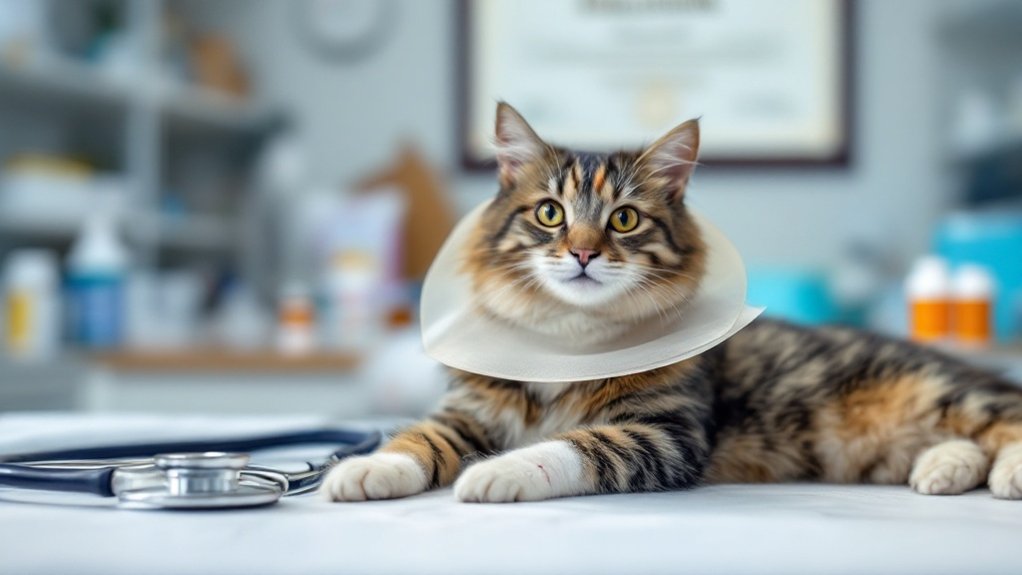
Cat insurance typically covers veterinary expenses for accidents, illnesses, and emergency care, with options for preventive services.
You’ll get coverage for diagnostics, surgeries, hospitalisations, and prescription medications when your cat needs treatment.
Most policies include chronic conditions like diabetes and kidney disease, while some offer additional benefits for alternative therapies and behavioural issues.
Your coverage choices can range from basic accident-only plans to comprehensive lifetime protection with extensive benefits.
Understanding Basic Cat Insurance Coverage Types
When it comes to protecting your cat’s health, understanding the different types of insurance coverage is essential.


Through policy flexibility, you’ll find four primary options: Lifetime, Time Limited, Accident Only, and Maximum Benefit coverage.
- Lifetime coverage offers the most extensive protection, resetting financial limits annually while covering both accidents and illnesses.
- Time Limited provides short-term protection for specific conditions, while Accident Only focuses solely on injury-related incidents.
- Maximum Benefit plans set predetermined limits per condition but continue covering new issues.
Each type serves different needs and budgets, making it crucial to evaluate your cat’s specific requirements.
Most policies exclude routine and preventive treatments from their standard coverage plans.
Common Medical Treatments and Services Included
Most cat insurance policies cover an extensive range of medical treatments and diagnostic services essential for feline health care.
You’ll find coverage for common conditions like urinary tract infections, kidney disease, and diabetes, along with necessary diagnostic tools including X-rays, MRIs, and blood work.
Your policy typically includes surgery, hospitalisation, and prescription medications prescribed by your vet.
Many insurers also cover alternative therapies such as acupuncture and hydrotherapy when treating eligible conditions.
Specialist referrals and behavioural therapy are often included, ensuring your cat receives comprehensive care for both standard and complex medical needs.
Insurance plans commonly cover accidents from minor injuries to serious broken bones requiring emergency care.
Emergency Care and Accident Coverage Details
In accordance with comprehensive pet insurance policies, emergency care and accident coverage provide essential protection for unexpected feline health crises.
Your coverage includes emergency diagnostics like X-rays and MRIs, plus urgent surgeries for life-threatening conditions.
You’ll receive coverage for crucial procedures including stomach pumping, tracheostomy, and prescription medications.
Remember that pre-existing conditions aren’t covered, and you’ll face age-related premium increases and co-payments after your cat turns 10.
Chronic and Hereditary Condition Benefits
Beyond emergency care coverage, your cat’s insurance policy extends robust protection for chronic and hereditary conditions.
You’ll receive lifetime coverage for ongoing health issues like diabetes and kidney disease, provided they aren’t pre-existing conditions and develop after the waiting period.
Your policy typically includes chronic management of conditions requiring long-term medications and treatments.
Most plans cover inherited and congenital conditions diagnosed after enrolment, such as polycystic kidney disease and heart defects.
While pre-existing conditions are generally excluded, some insurers may provide coverage if your cat remains symptom-free for a specified period.
Wellness and Preventive Care Options
Several cat insurance providers offer comprehensive wellness and preventive care options you can add to your base policy. These plans typically cover routine vaccinations, comprehensive exams, and diagnostic panels to monitor your cat’s health.
>> Best Pet Insurance for Cats That Starts Immediately
Your wellness plan may include essential procedures like spaying, neutering and microchipping, along with regular physical exams, faecal exams, and ear swabs. Many providers also include unlimited office visits and 24/7 veterinary consultations.
Monthly costs range from R100 to R500, with additional fees for dental coverage.
Policy Limitations and Exclusions
When selecting cat insurance, you’ll need to understand that pre-existing conditions are universally excluded from coverage, meaning any health issues your cat had before the policy begins won’t be covered.
Your cat’s age can substantially impact both coverage options and premium costs, with many insurers setting maximum age limits for new policies and increasing rates for senior cats.
You’ll also encounter annual payout caps that limit the total amount you can claim within a policy year, typically ranging from R50,000 to R300,000 depending on your chosen plan.
Pre-existing Conditions Limits
Pre-existing conditions represent one of the most significant limitations in cat pet insurance coverage, with insurers typically excluding any health issues that manifest before the policy’s start date or during waiting periods.
You’ll find that condition exclusions encompass any illness or injury your cat showed symptoms of before coverage began. This includes recurring infections, knee and ligament conditions, allergies, and chronic diseases like diabetes.
Even if your cat hasn’t received an official diagnosis, documented symptoms can qualify as pre-existing conditions. Most policies enforce waiting periods of 30 days, during which new conditions that arise won’t be covered under your policy.
Age-Related Coverage Restrictions
Three key age-related restrictions substantially impact cat insurance coverage options, with most insurers implementing maximum enrolment ages between 8–12 years for new policies.
Age limits often vary by provider and breed, with some pedigree cats facing stricter cutoffs due to hereditary health risks.
You’ll find that coverage types become more limited as your cat ages, with many insurers restricting older pets to basic policies.
While lifetime coverage remains available if you’ve insured your cat early, waiting until your pet is older typically results in higher premiums and more exclusions, particularly for chronic conditions.
Annual Payout Caps
Insurance providers implement various annual payout caps that define the maximum amount they’ll reimburse for your cat’s veterinary expenses each year.
You’ll find these annual limits typically range from R25,000 to unlimited coverage, with higher caps generally commanding higher premiums.
Some policies also include condition caps, which restrict payouts for specific health issues. For example, you might encounter a R20,000 limit for cancer treatments.
While unlimited coverage plans offer the most comprehensive protection for your cat’s healthcare needs, they’re usually more expensive.
When selecting a plan, consider your cat’s health risks and your financial comfort level.
Calculating Your Out-of-Pocket Expenses
When planning for your cat’s healthcare costs, understanding how to calculate potential out-of-pocket expenses is crucial for effective financial management.
Your total expenses will depend on the interplay between your deductible impact and reimbursement rates, along with your monthly premium costs.
Consider these key factors carefully when selecting your policy to optimise your coverage and minimise unexpected expenses.
- Deductibles range from R0 to R1,000+ and directly affect your premium costs
- Reimbursement levels typically fall between 70–90% of covered expenses
- Monthly premiums vary from R100–R900 based on your cat’s specifics
- Additional costs may include copays and routine care expenses
- Pre-existing conditions aren’t covered and require separate financial planning.
Special Coverage Features and Add-ons
Beyond standard pet insurance coverage, special features and add-ons provide enhanced protection for your cat’s diverse healthcare needs.
You’ll find coverage for hereditary conditions like heart disease and eye disorders, as well as chronic conditions such as diabetes and cancer across multiple plan periods.
Many policies now include alternative therapies like hydrotherapy and acupuncture, plus behavioural treatment for issues such as fur pulling.
You can also opt for third-party liability coverage, protecting you if your cat causes damage to others or their property.
Additional features often include prescription food coverage, overseas travel protection, and compensation for boarding fees during your hospitalisation.
Age-Related Coverage Considerations


Your cat’s insurance coverage will change substantially as they age, with most providers increasing premiums and introducing co-payments once your pet reaches senior status around age 7 to 10.
You’ll face higher monthly costs and potentially increased excesses for older cats due to their heightened risk of developing conditions like arthritis, diabetes, and kidney disease.
Conversely, insuring your cat as a kitten typically results in lower premiums and ensures coverage before pre-existing conditions can develop, making early enrolment financially advantageous.
Coverage Changes With Age
As cats advance into their senior years, insurance coverage typically undergoes substantial changes that pet owners must carefully consider.
Age considerations become crucial around 12 years old, when most South African insurers classify cats as elderly.
Your enrolment timing markedly impacts premium costs and coverage options, with early enrolment offering the most comprehensive protection.
- Insurance premiums typically increase as your cat ages
- Pre-existing conditions become excluded from coverage
- Some providers implement upper age limits for new policies
- Wellness plans may become more essential for preventative care
- Coverage for chronic conditions may require lifetime policy options
You’ll need to evaluate policy terms carefully, as providers often adjust coverage limitations and exclusions for senior cats. Many insurers restrict certain treatments or implement higher deductibles for ageing pets.
Senior Cat Premium Increases
When insuring senior cats, pet owners face significant premium increases that reflect the heightened risk of age-related health issues.
You’ll notice substantial age increases around 9–11 years, with premiums potentially doubling for cats 12 and older. These premium hikes stem from higher veterinary costs and increased likelihood of chronic conditions like arthritis, diabetes, and cancer.
To manage these rising costs, you can adjust your deductibles, lower reimbursement rates, or explore different coverage options. It’s essential to compare quotes from multiple South African insurers and review policies regularly.
Some providers offer no age caps for enrolment, while others maintain strict age limits.
Kitten-Specific Insurance Benefits
Three key benefits make kitten insurance particularly valuable during the early stages of pet ownership.
You’ll secure lifetime enrolment options, avoid pre-existing condition restrictions, and lock in lower premiums. Starting coverage between 8–14 weeks ensures comprehensive protection as your kitten grows.
- Coverage for diagnostic tests and surgeries
- Protection against breeding costs and complications
- Early access to preventative care benefits
- Guaranteed insurability for chronic conditions
- Lifelong coverage without age restrictions
Comparing Different Insurance Plans


South Africa’s pet insurance market offers diverse coverage options that require careful evaluation. Providers vary in plan flexibility, with reimbursement rates generally ranging from 70–90%.
You’ll find differences in claim submission processes and coverage scope among insurers.
When comparing plans, you’ll need to assess specific features like dental care, behavioural treatments, and alternative therapies.
Some insurers offer comprehensive plans that include preventative wellness benefits, while others specialise in affordable accident-only or chronic care coverage.
Conclusion
As you’ve seen, cat insurance offers extensive protection for your feline companion’s health journey, from routine wellness visits to unexpected medical events. Most plans cover accidents, illnesses, diagnostic tests, and prescribed medications.
While premiums vary based on coverage depth and deductibles, investing in pet insurance can substantially reduce financial strain when your cat requires medical intervention.
Consider your cat’s age, breed-specific needs, and risk factors when selecting the best coverage in South Africa.
#TAGS: What Does Cat Pet Insurance Typically Cover?
Disclaimer: The information provided in this article is for general guidance only and may not reflect the most up-to-date pet insurance plans, pricing, or terms in South Africa. Providers frequently update their offerings, and rates can change annually or even overnight. For the most accurate and current pet insurance options, we recommend reaching out to us directly for a personalised quote.
Pet Insurance Quote Request Form
Thanks for visiting @CoverSearch