
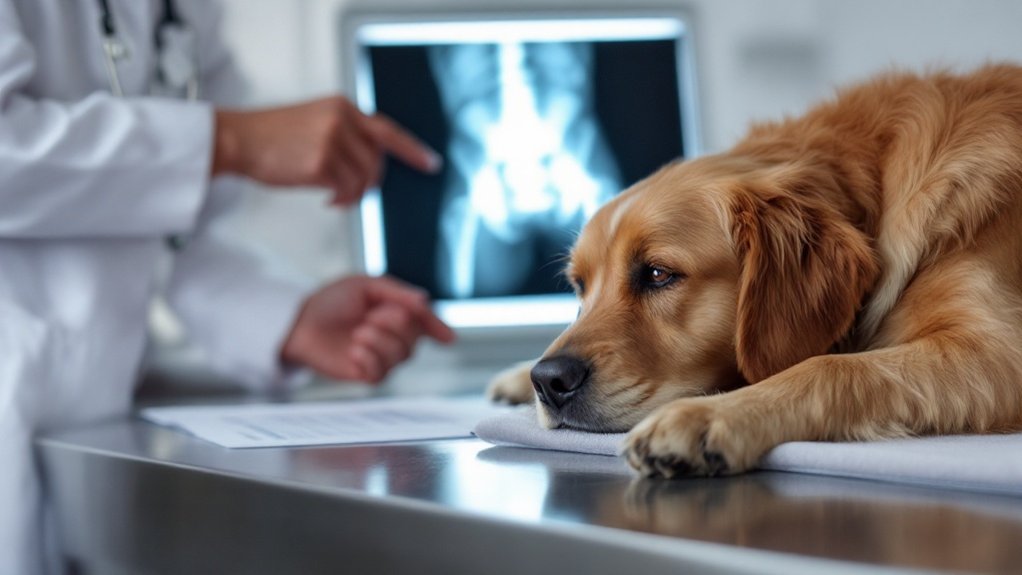
Pet insurance in South Africa can cover hip dysplasia surgery, but coverage depends on specific policy terms and pre-existing condition clauses.
You’ll need to verify orthopedic waiting periods, which typically range from 6 to 12 months, and understand bilateral condition exclusions.
With surgery costs ranging from R18,000 to R20,000 per hip joint, plus additional expenses for diagnostics and rehabilitation, it’s crucial to examine annual coverage limits and reimbursement rates.
Understanding the nuances of policy provisions will help maximise your benefits for thorough hip care.
- Understanding Hip Dysplasia in Pets
- The Reality of Pet Insurance Coverage in South Africa
- Cost Breakdown of Hip Dysplasia Treatment
- Key Factors Affecting Insurance Coverage
- Treatment Options and Their Insurance Implications
- Navigating Pre-existing Condition Clauses
- Choosing the Right Insurance Plan for Hip Care
- Making the Most of Your Pet’s Coverage Benefits
- So, Does Pet Insurance Cover Hip Dysplasia Surgery in South Africa?
- GET A PET COVER QUOTE NOW
Understanding Hip Dysplasia in Pets
While hip dysplasia represents one of the most significant orthopedic conditions affecting companion animals, it’s particularly prevalent in medium to large breed dogs.


The causes explained primarily stem from genetic predisposition, though environmental factors like overfeeding can accelerate its progression.
Symptom identification typically reveals characteristic signs including joint laxity, abnormal gait patterns, and progressive mobility impairment.
You’ll notice affected pets may exhibit bunny-hopping movements, difficulty rising, and reduced physical activity. Treatment and ongoing care can range from medication to surgery throughout the pet’s lifetime.
The condition necessitates radiographic evaluation for definitive diagnosis, with manifestation possible from 5-6 months of age or later in adulthood, often accompanied by osteoarthritic changes.
The Reality of Pet Insurance Coverage in South Africa
Pet insurance coverage in South Africa offers varying degrees of protection for conditions like hip dysplasia, with specific parameters governing eligibility and reimbursement.
When evaluating coverage options, you’ll need to understand the following key aspects:
- Pre-existing condition exclusions apply to hip dysplasia diagnosed before policy inception.
- Waiting periods typically range from 30 days for illnesses to 12 months for hereditary conditions.
- Bilateral condition clauses may limit coverage if treatment was previously required on the opposite side.
- Coverage limits, deductibles, and excess fees vary considerably among providers.
Your pet insurance policy’s effectiveness depends on timing, thorough understanding of terms, and selection of appropriate coverage levels for your pet’s specific needs.
Providers like MediPet offer benefit booster options to increase coverage amounts for expensive procedures like hip dysplasia surgery.
Cost Breakdown of Hip Dysplasia Treatment
When considering hip dysplasia treatment in South Africa, you’ll need to account for surgical costs ranging from R18,000 to R20,000 per hip joint, with bilateral procedures typically costing R35,000.
Your total expenses will include pre-surgical diagnostics, such as bloodwork and X-rays, as well as post-operative rehabilitation costs that can range from R10,000 to R20,000.
You’ll need to verify your pet insurance policy‘s coverage limits and waiting periods, as pre-existing conditions aren’t typically covered, and specialised treatments may require additional coverage riders.
Surgery Costs and Estimates
Three primary factors determine the cost of hip dysplasia surgery in South Africa: the surgical procedure type, geographic location, and the operating veterinary clinic’s expertise.
When considering surgery financing options and veterinary care alternatives, you’ll find significant cost variations across treatments.
Key surgery costs include:
- Total hip replacement: R18,000-R20,000 per side
- Bilateral procedure: Up to R35,000 total
- Pre-operative diagnostics: Variable costs for X-rays, blood work, and imaging
- Post-operative rehabilitation: R10,000-R20,000
These estimates reflect thorough treatment protocols, though actual costs may vary based on your specific location and chosen veterinary facility.
Additional Medical Expenses
Beyond the primary surgical costs, an extensive cost analysis of hip dysplasia treatment must account for multiple additional medical expenditures.
You’ll need to budget for diagnostic procedures, including pre-surgical blood work to assess surgical risks and X-rays ranging from R2,500 to R4,000.
| Medical Category | Essential Items | Estimated Cost |
|---|---|---|
| Diagnostics | X-rays & Blood Work | R2,500-R4,000 |
| Medications | Pain & Anti-inflammatory | R800-R1,500 |
| Recovery Care | Physical Therapy | R1,200-R2,000 |
Recovery challenges often necessitate ongoing medication and rehabilitation protocols, including anti-inflammatory drugs, antibiotics, and physical therapy sessions.
These supplementary expenses considerably impact the total treatment cost and should be factored into your insurance considerations.
Long-term Treatment Planning
Understanding the extensive cost structure of hip dysplasia treatment requires careful consideration of both conservative and surgical management options.
When planning your pet’s long-term treatment strategy, you’ll need to account for both holistic approaches and surgical interventions.
Key cost considerations include:
- Initial surgery costs of R18,000-R20,000 per hip joint
- Supplementary treatments including physiotherapy and hydrotherapy
- Ongoing medication and joint supplements
- Regular follow-up consultations with specialists
These long-term strategies often combine conservative management with post-surgical care, requiring a thorough financial plan that accounts for both immediate surgical expenses and sustained therapeutic interventions.
Key Factors Affecting Insurance Coverage
When evaluating pet insurance coverage for hip dysplasia in South Africa, several critical factors determine both eligibility and premium costs.


Coverage variations between policy types greatly impact your options, with extensive and lifetime policies typically offering protection for hereditary conditions, while accident-only plans exclude them.
Your pet’s breed plays a crucial role, as German Shepherds and Labradors face higher premiums due to genetic predisposition.
Pre-existing conditions and age restrictions may limit your coverage options, while your geographical location influences premium costs based on local veterinary care expenses and specialist availability.
Treatment Options and Their Insurance Implications
Pet owners confronting hip dysplasia must carefully consider how their insurance coverage aligns with available treatment pathways.
When evaluating treatment efficacy and insurance coverage, you’ll need to assess both surgical and conservative management options.
- Total hip replacement offers best possible outcomes but requires verification of coverage limits, typically R18,000-R20,000 per hip.
- Physical therapy and medications fall under recurring treatment benefits, subject to annual caps.
- Pre-existing condition clauses may affect bilateral cases, creating insurance exclusions.
- Conservative management through weight control and lifestyle modifications remains essential regardless of coverage.
Always confirm specific procedure coverage with your insurer before proceeding with treatment protocols.
Navigating Pre-existing Condition Clauses
You’ll find that insurers define pre-existing hip conditions through documented symptoms or diagnoses prior to your policy’s effective date, even if formal hip dysplasia confirmation hasn’t occurred.
When enrolling in pet insurance coverage for hip dysplasia, you must navigate mandatory waiting periods, which can range from several weeks to months depending on your selected provider.
Though Medipet notably offers coverage without waiting periods.
Your policy’s terms will outline specific waiting period durations and any exclusions related to pre-existing hip conditions, making it crucial to review these details during enrollment.
Understanding Policy Waiting Periods
Successfully maneuvering pet insurance waiting periods requires a thorough understanding of policy timing and pre-existing condition clauses.
South African insurers implement varying waiting periods that you’ll need to navigate carefully when seeking coverage for hip dysplasia surgery.
Key waiting period variations include:
- GENRIC’s 31-day illness waiting period with 12-month pre-existing condition clause
- Oneplan’s 60-day waiting period for illnesses and kennel coverage
- Paw Paw Pet’s standard 30-day illness waiting period
- Immediate coverage for accidents across most providers
Understanding exclusions is critical, as hip dysplasia symptoms documented before policy activation are typically classified as pre-existing conditions. This classification affects your coverage eligibility and claim approval.
Pre-existing Hip Issues Defined
Although securing pet insurance coverage for hip dysplasia surgery requires careful timing, understanding how insurers define pre-existing conditions is crucial for policy navigation.
Pre-existing conditions encompass any health issues documented before your policy’s effective date, including both diagnosed conditions and observed symptoms.
Most insurance policies exclude coverage for pre-existing hip conditions, with Medipet in South Africa being a notable exception.
When evaluating coverage options, you’ll need to undergo thorough medical history reviews. Early enrollment is your best strategy for avoiding pre-existing condition exclusions, as insurers typically won’t cover hip dysplasia treatments if symptoms appeared before policy initiation.
Choosing the Right Insurance Plan for Hip Care
When selecting a pet insurance plan for hip dysplasia coverage, it’s crucial to evaluate specific policy components that directly impact your pet’s orthopedic care.
Your insurance comparison should focus on extensive plans that address both acute and chronic hip conditions.
- Verify orthopedic waiting periods, which typically range from 6-12 months for hip-related conditions.
- Examine coverage exclusions for bilateral conditions and breed-specific limitations.
- Review annual coverage limits, particularly for plans offering R35,000 maximum coverage.
- Assess chronic care provisions for long-term hip dysplasia management, including physiotherapy and medication.
Remember to enroll your pet early to avoid pre-existing condition restrictions that could limit your coverage options.
Making the Most of Your Pet’s Coverage Benefits
Maximising your pet insurance benefits requires a thorough understanding of your policy’s coverage parameters for hip dysplasia treatment.


Coverage dependencies include waiting periods, breed restrictions, and pre-existing condition exclusions that directly impact your claim eligibility.
For ideal benefit maximisation, verify your policy’s specific terms regarding surgical interventions, physical therapy, and chronic condition management.
Consider extensive plans offering higher annual limits and reimbursement rates for hip dysplasia treatments.
Review provider-specific features like Dotsure’s inclusive coverage and Oneplan’s customisable options to ensure your selected policy aligns with your pet’s potential treatment needs.
So, Does Pet Insurance Cover Hip Dysplasia Surgery in South Africa?
You’ll need to carefully review your policy’s terms regarding congenital conditions and waiting periods before proceeding with canine hip dysplasia (CHD) surgery.
While most South African pet insurers offer coverage for orthopedic procedures, pre-existing conditions and breed predispositions may affect your claim’s success.
Consider upgrading to extensive coverage that includes bilateral condition provisions and surgical interventions for ideal financial protection during your pet’s treatment journey.
Disclaimer: The information provided in this article is for general guidance only and may not reflect the most up-to-date pet insurance plans, pricing, or terms in South Africa. Providers frequently update their offerings, and rates can change annually or even overnight. For the most accurate and current pet insurance options, we recommend reaching out to us directly for a personalised quote.
Pet Insurance Quote Request Form
Thanks for visiting @CoverSearch